Showing posts with label girls. Show all posts

Tuesday, April 14, 2015

I Don't Care that Meninism is a Joke

Meninism is a silly, parody of men's rights activists, who believe that feminism is just a bunch of misandrist girls whining about how bad their lives are. I mean, that's what it is, right?
I'm here to tell you that no, meninism is not a parody of men's rights activists. Okay, so it started out like that, and that's what the twitter bio says. The purpose behind it is actually great: point out how dumb some people are, and roll with it. But the purpose can get lost in translation.
Meninism is actually a thing. People call themselves meninists, because they actually believe that men are oppressed and that feminists are actually "feminazis", who just want women to be higher in our society than men. Just because men get hurt because of our society does not mean that they need a movement named after them. Sure, men are expected to be strong, and to not want to stay at home. God forbid if a man is sensitive and cries. But that's not what meninism is really about. 
Meninists constantly pull that "Oh, girls criticize Barbie for being skinny and excessively sexualized, but no one has a problem with He-Man!". And that is not true. I actually like Barbies: they might be unrealistically skinny, but that never made me feel bad about myself. In fact, she and all her different jobs made me feel like there was nothing holding me back from being whatever I wanted when I grew up. But the constant sexualization of any female character is a problem. The supposed sexualization of any male character, however, is not a problem.
Men are rarely sexualized. If they are, it is for the male gaze, and therefore, part of a male power fantasy. A good amount of the time, media is made to cater to men, not women. Straight, white, cisgendered men, and that's a problem. Men are constantly strong, and if they're not, they're called gay. Women, on the other hand, are treated like objects, just pairs of boobs that are supposed to look hot. And if they are "action-y"? Then they call other, weaker characters girls, and their explanations as to why they are so strong are "because I have eight brothers". The fact that these constantly show up in media is a problem, since it does tell girls and women that "hey, it's not in your nature to be strong. Sorry."
Yes, the fact that large men are hated on is a problem too. But don't use those pictures that have women of all different sizes to make that point. Yes, most women would want the strong, skinny man. It is a problem, but not because men are oppressed. It's because of society's feelings toward fat people. You do make good points, but creating your own movement is not the way to go about fixing them. Keep in mind the true definition of feminism. It's not a hate movement, it's a way for women to be considered equal to men, and a way to get some of the pressure of being a "tough, strong man" out of the picture for those that just can't reach that ideal.
Men aren't oppressed. Not as a whole. As soon as there is a majority in our world taking away your right to marry, your reproductive rights, your rights to be alive, then I will help you out of your situation. For now, however, you aren't. But you can help what hatred there is toward you by educating yourself about what feminism is, and learning how you can help.

Thank you, Toler Wolfe.

Tuesday, April 7, 2015

Four Important Things Everyone Needs to Remember

I've been considering shaving off half my hair lately, but my parents have been totally against the idea. They think I'll look stupid and I'll feel stupid, but I (obviously) disagree with them. My main argument is that it is my body, and I can do with it as I please. I think that everyone should feel this way too, and I'm here to help this mindset become popular.

1. It's your body.

Yes, it's kind of a given, but this is so important. It is your body, so anyone else's opinions shouldn't matter. Yeah, if someone says, "Hey, you have some lettuce in your teeth," or something, fix it, because that's just kind of a fact, and who wants to walk around with food in their teeth? But if someone says, "Hey, you're too fat" or "Hey, you're too skinny," ignore them.


Basically, if you can change what the person thinks within five minutes, fix it. If not, then too bad for them. It's who you are, and if they can't stand that, too bad.


2. Everything that you think looks good on you looks good on you.

If you want to wear high-waisted shorts, go ahead. If you want to wear a vertical-striped dress but you're tall, hey, it's what you think that matters. If you're chubby, wear all the horizontal-stripes that you want. Don't want to shave your legs? They're yours! Want bright blue hair? Go for it! Love sweatpants? If that's what you want to wear, wear 'em! So what if magazines say "if you have this body type, wear blah blah blah"? It's what you think looks good that matters, so rock it!

3. Be aggressive.


This one might seem a little bit random, but being aggressive is an important thing to do. If someone says, "hey, you look dumb in that," just say, "No, I really don't."
It's your body, and you need to let people know that. Telling people that yeah, it is your body is the only way that it's gonna get through to them. You need to let people know that you don't care what they think, and that the only opinion that matters to you is your own.

Who cares what guys hate? It's your choice, ladies.
4. Respect others.

Okay, so I know I'm saying to be aggressive, but don't hurt someone. If someone is genuinely trying to help you, don't tell them that you don't care. For example, if someone shows you one of those magazine articles that says what people with each body type should wear, don't yell at them. Say, "I know that you're trying to help me, but I'm fine. I'm making decisions about my body, and I'm not letting anyone else get involved in that, even 'experts'. So thank you for your help, but I don't need it." Unless the person is being mean to you, there's no reason to be mean to them. Don't forget to respect other people's fashion choices, too. They're theirs, not yours, so do unto others as you would have them do unto you.

If you follow these four rules, be prepared for a happier life. Don't let other people get you down when you can lift yourself up. 

Thursday, March 26, 2015

A (Not-so) Exhaustive List of MOGAI Terms

Everybody knows what LGBTQQIAP+ means. Lesbian, gay, bisexual, transgender, questioning, queer, intersex, asexual, pansexual, and others.Recently, however, someone came up with the terms MOGAI or MOGII, which both stand for 'Marginalized orientations, gender identities, and intersex'. I do actually prefer this, because it is an umbrella term covering things like agender and other identities that aren't usually talked about. However, there are problems with this term, as it does not specifically mention said terms, and someone needs to document all of these terms. That's what I'm here for. Please know that this list is non-exhaustive, and may not include all terms that apply.
  • Gay: Someone who is sexually and/or romantically attracted to a person of their own gender. This term is mostly used to describe men.
  • Lesbian: A woman who is sexually and/or romantically attracted to women.Bisexual: A person who is sexually attracted to more than one gender. Some are only attracted to two, while others are attracted to many.
  • Pansexual: A person who is sexually attracted to people, regardless of gender.
  • Asexual: A person who is not sexually attracted to anyone. These people can still have a sex drive.
  • Homosexual: A person who is sexually attracted to people of their gender
  • Heterosexual: A person who is sexually attracted to people of the opposite gender.
  • Homoromantic: Someone who is romantically attracted to people of their gender.
  • Heteroromantic: Someone who is romantically attracted to people of the opposite gender. 
  • Biromantic: Someone who is romantically attracted to more than one gender
  • Panromantic: Someone who is romantically attracted to people, regardless of gender.
  • Aromantic: Someone who does not feel romantically attracted to anyone.
  • Demi-sexual: Someone who is only sexually attracted to someone after getting to know them.
  • Demi-romantic: Someone who is only romantically attracted to someone after getting to know them.
  • Cisgender: Someone who identifies with the gender they were assigned at birth.
  • Transgender: Someone who does not identify with the gender they were assigned at birth.
  • Agender: Someone who does not identify with a gender.
  • Bigender: Someone who identifies with two genders
  • Trigender: Someone who identifies with three genders
  • Genderfluid: Someone who's gender can change depending on the situation
  • Demigirl: Someone who identifies as mostly agender, but also partially as a girl
  • Demiguy: Someone who identifies as mostly agender, but also partially as a boy.
  • DFAB: Designated female at birth
  • DMAB: Designated male at birth
  • Queer: Originally meaning weird or odd. Now used to describe people who are not straight and cisgendered
  • Coming out: Explaining your gender or orientation to someone
  • Gender Identity: The gender which someone believes they are
  • Heteronormative: Implying that being heterosexual is the "norm" in society.
  • Metrosexual: A heterosexual male who takes care of his appearance
  • Binding: The act of using a binder to make someone's chest less noticeable. Never use ace bandages to bind.
  • Top Surgery: Getting surgery to remove or add breasts. The former can also be referred to as a mastectomy
  • Trans-boy/man: A person DFAB who identifies as male
  • Trans-girl/woman: A person DMAB who identifies as female
  • Homophobia: A fear/hatred of any queer people, usually focusing on those who are attracted to people of the same gender
  • Biphobia: A fear/hatred of bisexuals. This can also manifest in the queer community
  • Transphobia: A fear/hatred of transgender people. This can also manifest in the queer community.
  • Otherkin: People who believe that they are actually something not human. These people are well-known for making the non-binary community look bad.
  • Gender: the state of being male or female (typically used with reference to social and cultural differences rather than biological ones).
  • Sex: either of the two main categories (male and female) into which humans and many other living things are divided on the basis of their reproductive functions.
  • Intersex: A person who is not designated male or female.Gender roles: The designated roles given to men and women.
  • Preferred Pronouns: What a person prefers to be called, other than their name. 
  • Non-binary Gender: A gender that is not male or female.
  • Binary Genders: Male or female
  • Closet: Someone "in the closet" has not come out as queer to many/any people
It should be noted that this is not meant to be used as the be-all end-all of MOGAI terms, and that there are other important terms that are helpful to know when discussing gender and sexuality. Just googling these terms can usually serve to explain what they are.

Tuesday, March 10, 2015

Why Gender Signifiers are Actually Okay!

In a video called "Ms. Male Character", Anita Sarkeesian shortly discusses gender signifiers and why they are bad. Gender signifiers are simply a way of showing the gender of a character - there is nothing wrong with this. However, she complains, saying that a bow is not inherently feminine. I do agree with her on that, partially because I find the gender binary dumb. However, there is honestly no problem with gender signifiers!
There is no problem with viewing an item as traditionally feminine. For example, short hair is usually seen as traditionally masculine, and long hair is traditionally feminine. No one sees any problems with a girl with short hair and a boy with long hair, though. It's the same with bows: society might view them as traditionally feminine, but there's no reason a boy can't wear one! Dresses, make-up, and dolls are in the same boat. Women can like footballs and cars, too! Honestly, these things stereotypically belong to one gender, but either gender can use them.
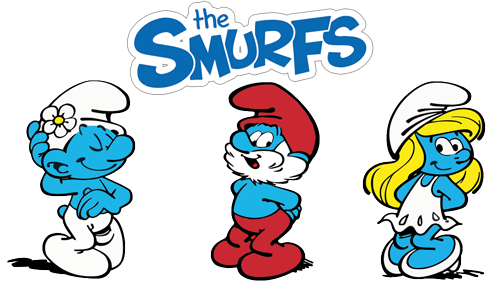
Using gender siginifiers is just like using certain traits to explain flat characters. For example, in The Smurfs, each smurf has one or two traits that describe them: Papa Smurf is the patriarch, Smurfette is the girly one, Sassette is the tomboy, Vanity Smurf is vain, Hefty Smurf is strong, and Grouchy Smurf is, well, grouchy. These smurfs can all be described in one or two words, and that's what's happening with gender signifiers: the author is explaining that this character is girly with just what she wears.
Despite the sexism Sarkeesian attempts to call out within the video, gender sigifiers aren't actually that big of a deal. It should be noted, however, that I am not trying to call Anita out. I am trying to point out her shortcomings and provide better arguments.